I love wine. period. full stop. I have loved wine almost as long as i can remember. my first memory of wine was the sweet communion wine in the Orthodox Russian church on Geary Boulevard in San Francisco when i was three years old.
When i was growing up in the City, my parents (mostly my dad) would have a glass of wine with dinner, most often a jug wine from Carlo Rossi, Italian Swiss Colony, Franzia, or if we were lucky, Gallo. I’d sometimes get a small taste of whatever dad was drinking and it was usually unmemorable, a bit sweet and usually red, although for bigger family events we would also get white jug wine.
Normally the wine was an afterthought, something to wash down the delicious home made food mom made. It was nothing too special, although on the rare occasion someone might bring a bottle of something a bit better (i.e. NOT in a gallon jug). I remember my Uncle Willi’s go-to was Weibel Green Hungarian, which I surprised myself in remembering.
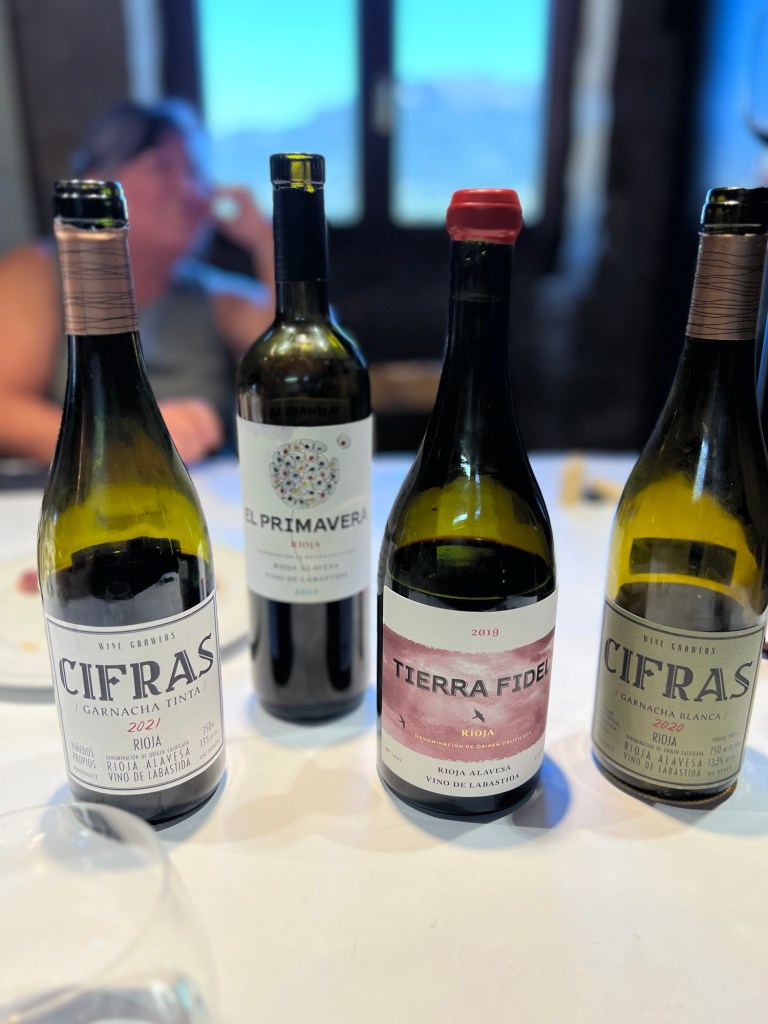
Rioja is undoubtedly Spain‘s most famous wine region, and I recently visited two very different wineries.
Sunflower fields in the morning, Rioja countryside Bodegas Tierra, Rioja Alavesa
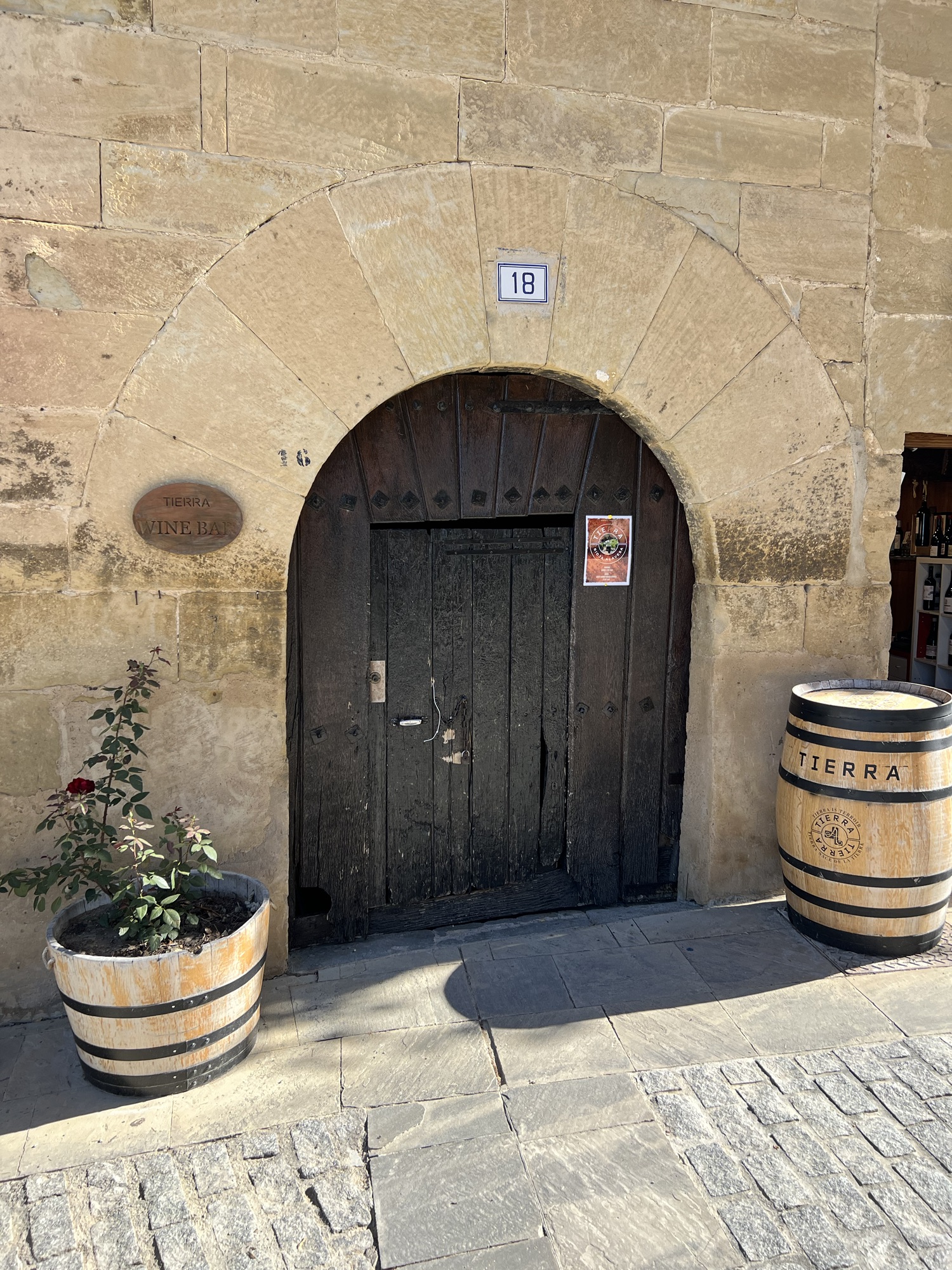
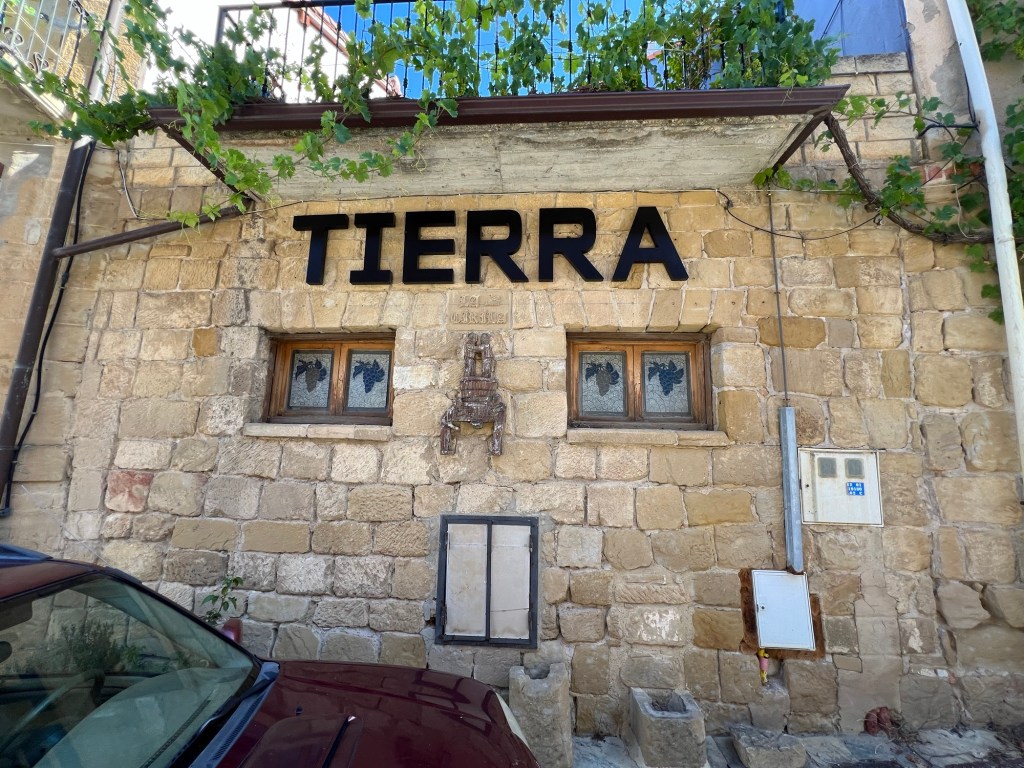
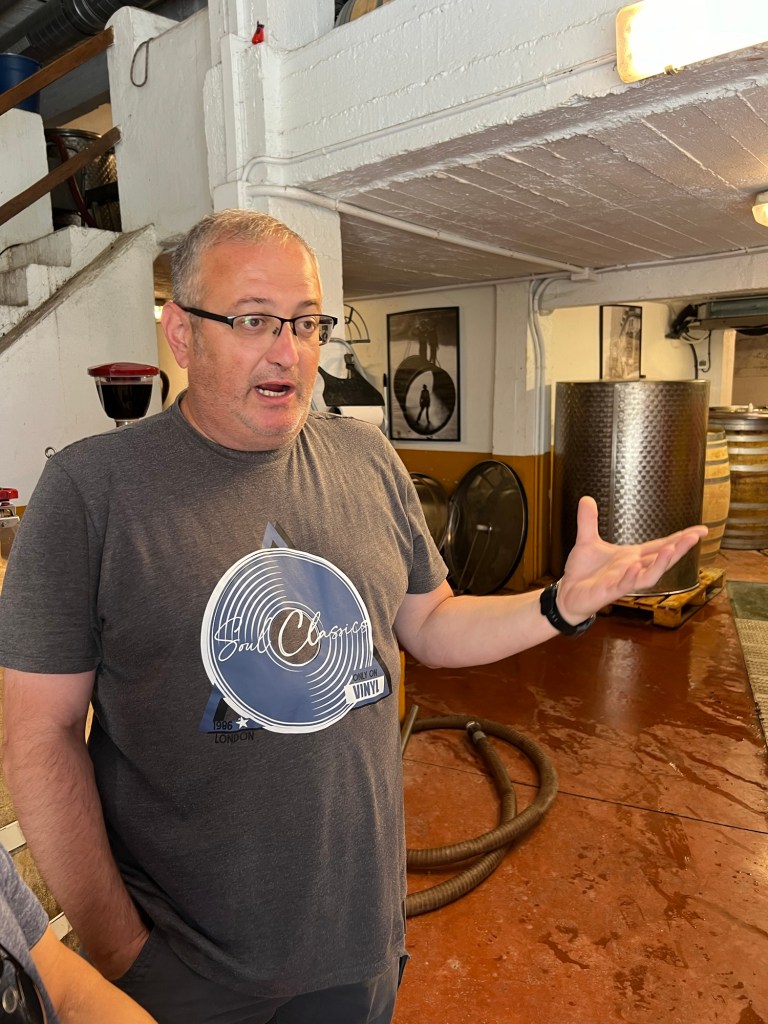
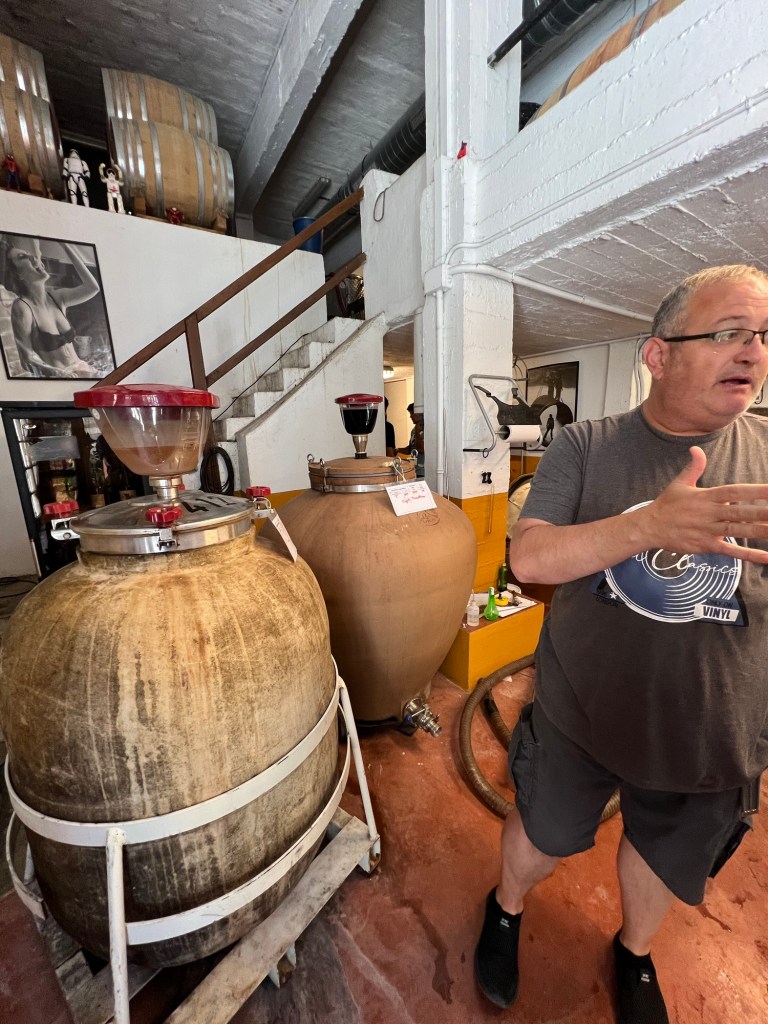
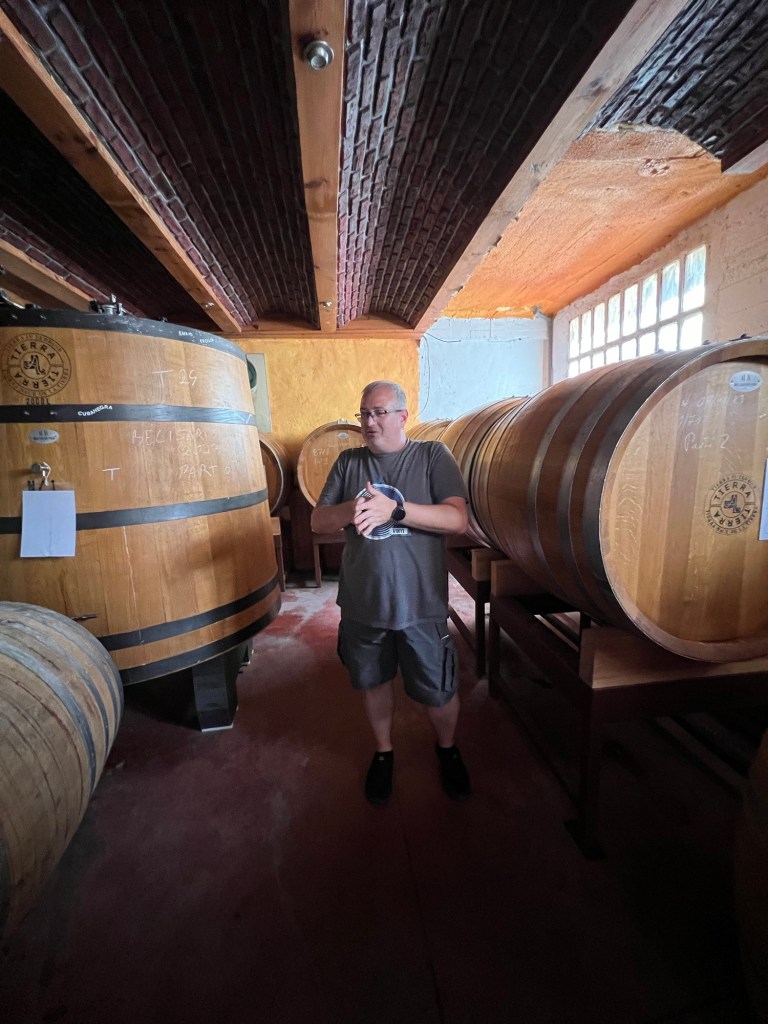
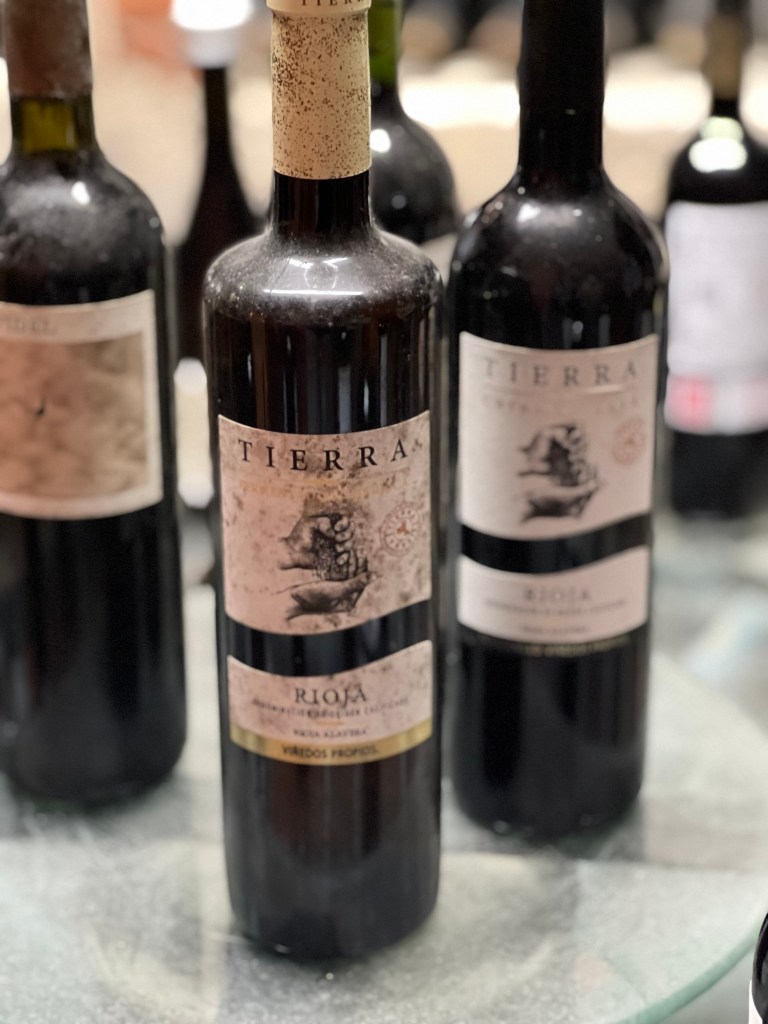
Tierra Winery in Rioja Alavesa was our first stop. Our host was José Manuel, who has family ties to the land, although he’s not a part owner. He grew up in the area, and characterizes the winery as a mix of playful, creative, yet grounded, recognizing the elements that man cannot change: the soil, and the weather. beyond that, Tierra is a playground for their winemaker and staff, and the small winery (they make less than 20,000 cases per year), make 17 different wines. they also use a variety of fermenting and aging containers, ranging from the traditional wood barrels, stainless steel, ceramic vats, concrete eggs, and even to their knowledge, the first marble fermenter.
Tierra as a winery is just over 30 years old, but even as a small winery has received acclaim from wine writers such as the well-known Tim Atkins. Their wines respect the traditions of Rioja, but are not bound by it.  if I had to characterize their wines, my impressions are that they are fresh, food, friendly, use little to no oak.  they are very much focused on letting the grapes express the character of the land. 
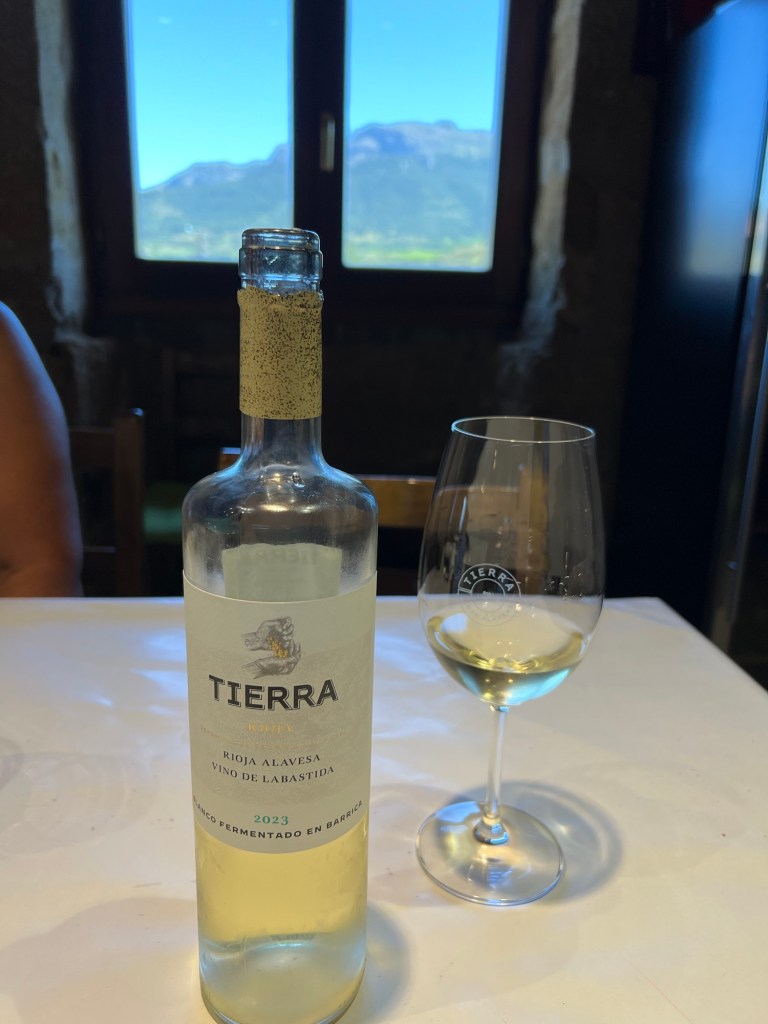
José Manuel, our host Wines kept in the cellars from the inception of the winery in the early 90s Tierra white wine
The Tierra white (simply labeled as “Tierra“), is an inexpensive yet carefully made white wine, composed of 60% Viura, 30% Garnacha blanca, and 10% Malvasía. licensed, subtle aromas of citrus, green apple, white flowers. The palate was clean and crisp, with a light lingering finish. Perfect with any kind of seafood or just on its own.
Tierra Fidel, a blend of 50% Graciano and 50% Garnacha. Rich and powerful, lingering all the pallet, yet fresh. My favorite wine of the bunch. And no Tempranillo!
I found the wines of Tierra to be straightforward, unadorned, and true to its name, let the flavors of the land shine. The passion and dedication of the winemaker (Carlos Fernandez Gomez) and José Manuel was also evident. What a wonderful introduction to Rioja, the Rioja of today.
Next, a visit to La Rioja Alta, a historic and classic Rioja winery.
(I was originally going to title this post “Making of the case for Spain“, as if Spanish wines needed to have a case made for them. After realizing how ridiculous this was, I settled on this more neutral title).
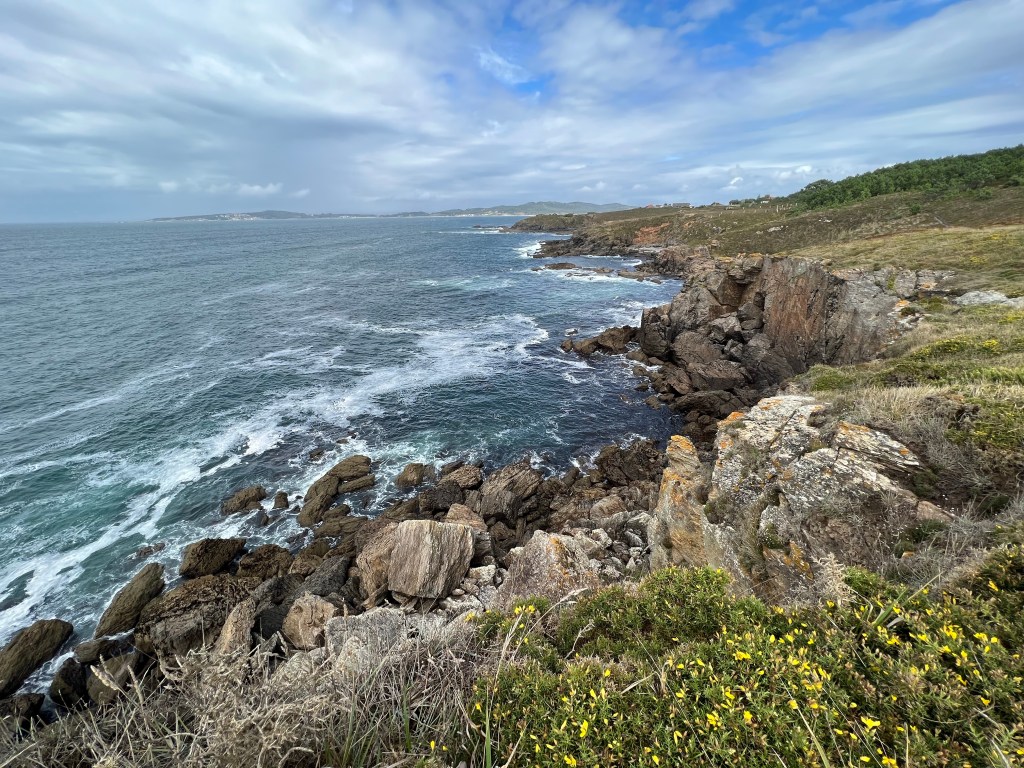
Galicia coastline-Albariño country
OK, it’s three months later and I am just now writing about Spain. What’s up with that? It’s not that Spanish wines were not inspiring. They were. It’s just I’m back to my old lazy ways.
What impressed me most about Spanish wines? Quality and value. And diversity. Of course that comes from my newbie perspective; I think Spanish wines have been high-quality for hundreds of years, and have been a great value for as long as I have known. They’ve been overshadowed by their more famous, and usually more expensive French counterparts to some extent Italian counterparts. OK enough generalities, let’s get on to the actual places, experiences and tastes of these amazing wines!
Galicia
OK, I AM making the case for Spain (sorry)… why it is so vast, diverse, beautiful, delicious, and the people seem confortable in their own skin.
We were on the road from Salamanca to Santiago de Compostela (on the Galician coastline), and stopped at a small freeway offramp town near Ourense (why would even anybody even know about the name of this town?)
While stopping to load up on diesel, we decided to stop for lunch at a small restaurant next door next to a dusty parking lot across the street from the gas station
Looked simple enough, but at 1:40 PM, they asked us if we had reservations (?)
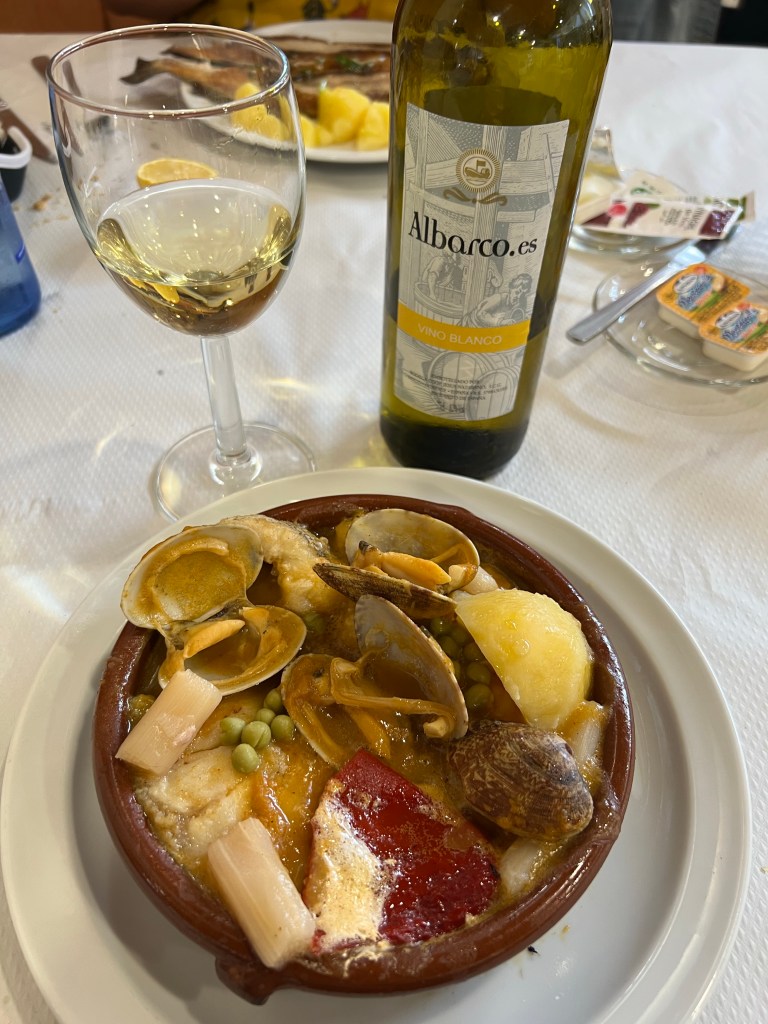
Surprisingly, the menu was fairly extensive, even though it was basically a truckstop. They had a three course menu for €14… I had a #Davimoment when I ordered the merluza en Cazuela (my mothers name was Davinia).
It looked, smelled, and tasted like some thing that mom would make… And of course at that age, when I was a kid, I didn’t appreciate at all. Tomatoes, onions, peas, potato and a big hunk of hake (what an unfortunate name for merluza, an otherwise delicious, meaty fish) along with a few clams. That, and a cheap €3 bottle of local white.
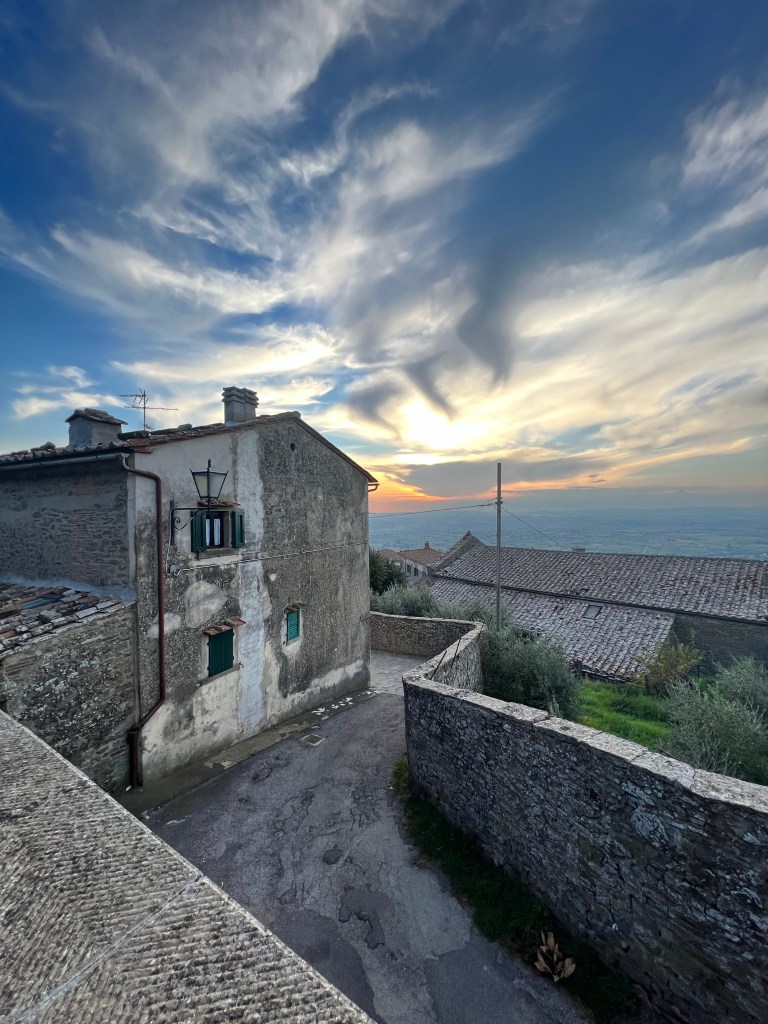
Cortona is a cute-as-a-button medieval hill town in southern Tuscany, near the border with Umbria. In this part of Italy, the dominant grape is Sangiovese, and just the name of the best wines made from it gets me excited: Chianti, Brunello (di Montalcino), Vino Nobile di Montepulciano.
Sunset in Cortona, October
Not only are the wines fantastic, they also have a great wine culture, promoting local, small production wines, and seemingly every sub-area produces a local wine which can be found in their shops and restaurants. Of course the food is also fantastic….a multitude of cheeses, with many variations of pecorino being the top of the heap; anything pork, or here, wild boar (cinghiale), porcini mushrooms, pastas, fresh produce, maybe the best olive oil(s) anywhere…oh and beef from the chianina cattle. See fiorentina steak, below.
Fiorentina, from La Bucaccia, Cortona
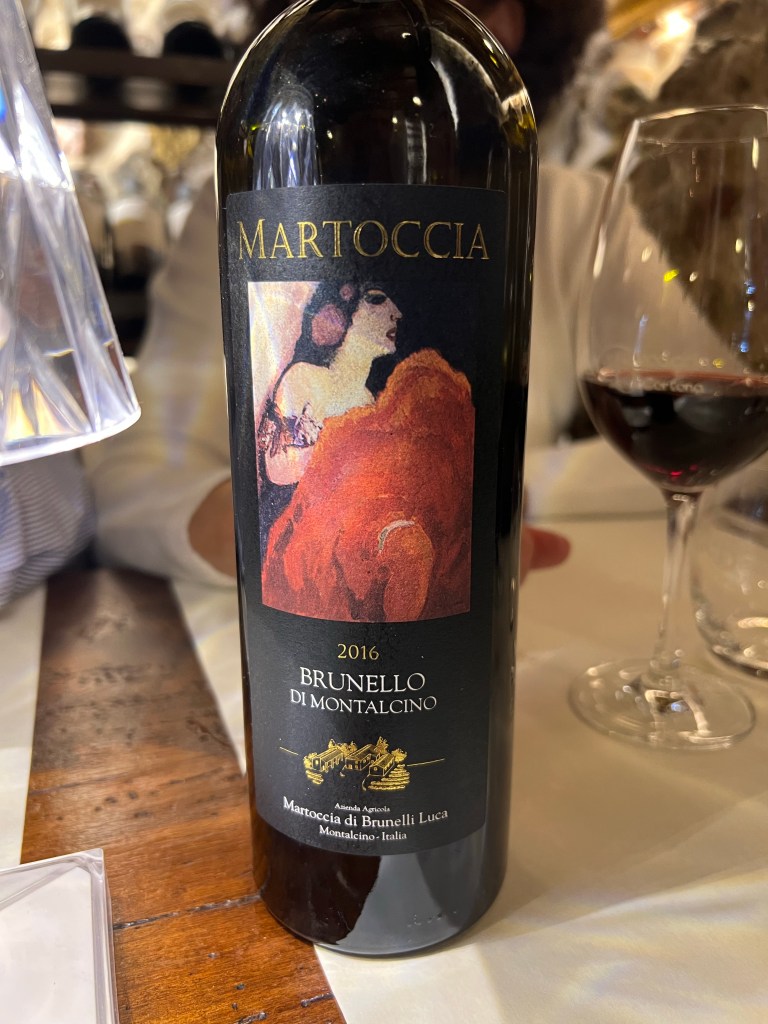
In my opinion what characterizes the wines of Tuscany is their complementary nature to the food of the land. High in acidity, to offset tangy tomato dishes and sauces, spicy, medium in weight, make them delicious food wines. With the fiorentina, we had a beautiful Brunello from 2016; plum, prunes and dried cherry on the nose, with a variety of spices, and even a bit of licorice after it was opened up for close to an hour. A Riserva Brunello would have been even richer, also close to double the price, so even at €62 our bottle was delicious.
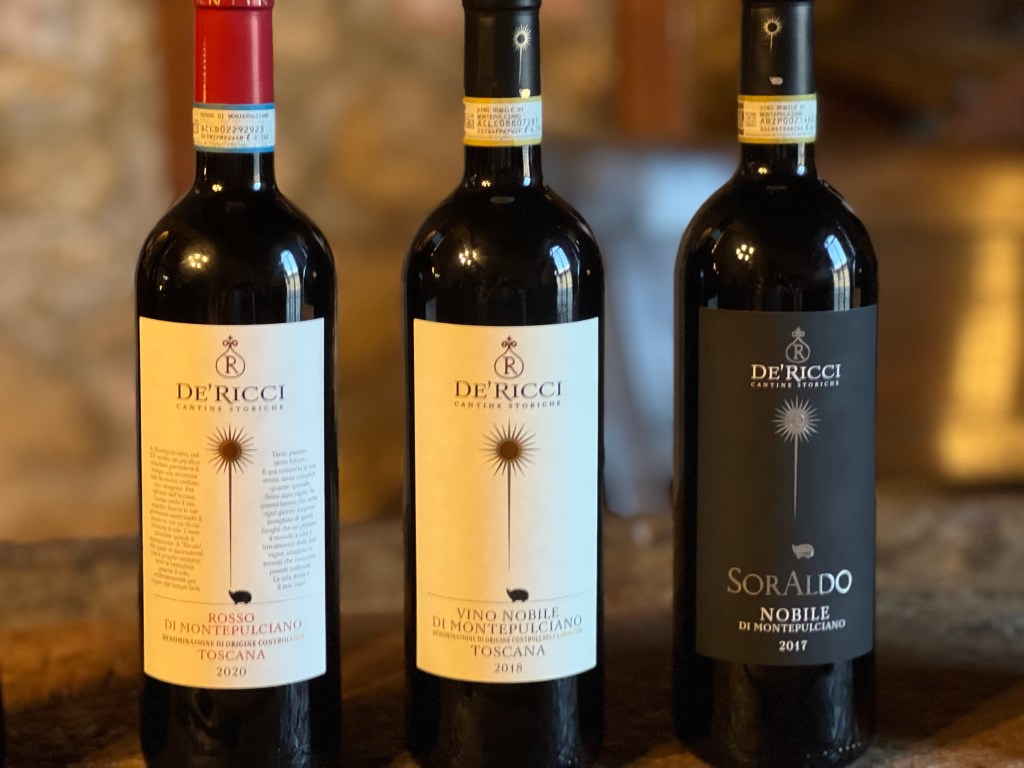
A day trip to another medieval hill town (Montepulciano), and to visit a couple of wineries with historic underground cave/cellars. Fun! As you walk up into the town through the ancient gates, you’ll see plenty of places selling, tasting and shipping wines for your pleasure. I visited De’Ricci and Tolosa, at the recommendation of Antonio, whose family owns the oldest wine store in Cortona (Enoteca Molesini: free wine tastings Thursday afternoons!).
Vino Nobile di Montepulciano from De’Ricci
I’m not gonna go into depth for the tasting, and given that the wines do best in context of the food they’re paired with, I’ll just say that that they are of high quality and true to the varietal character (i.e. Sangiovese).
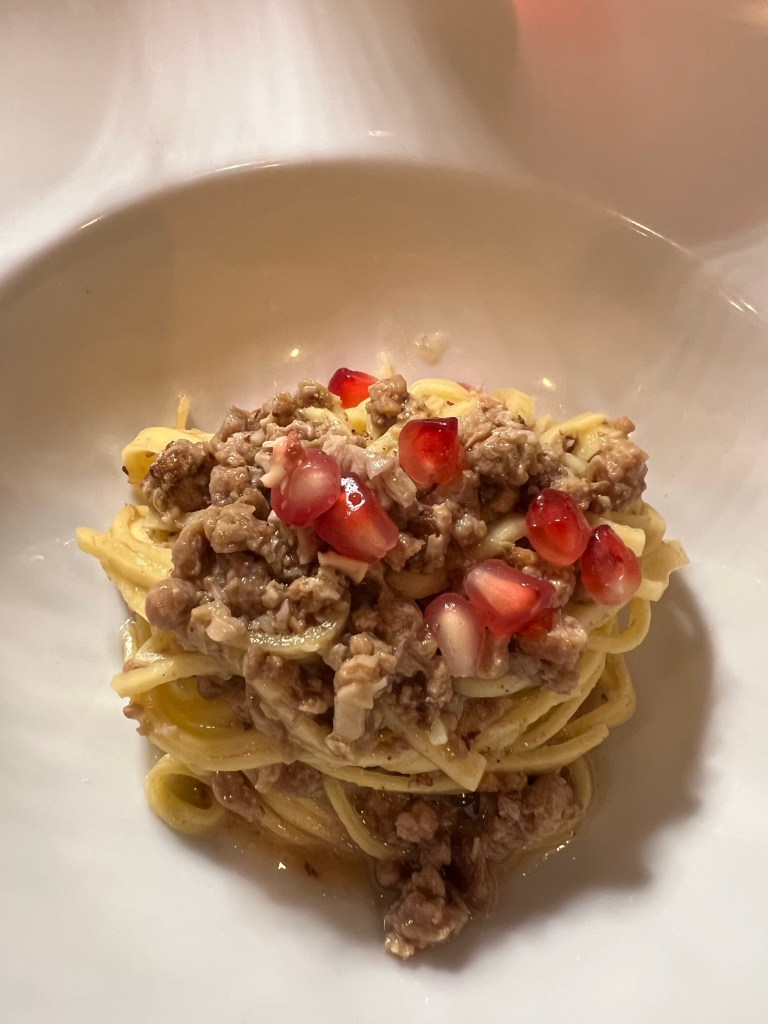
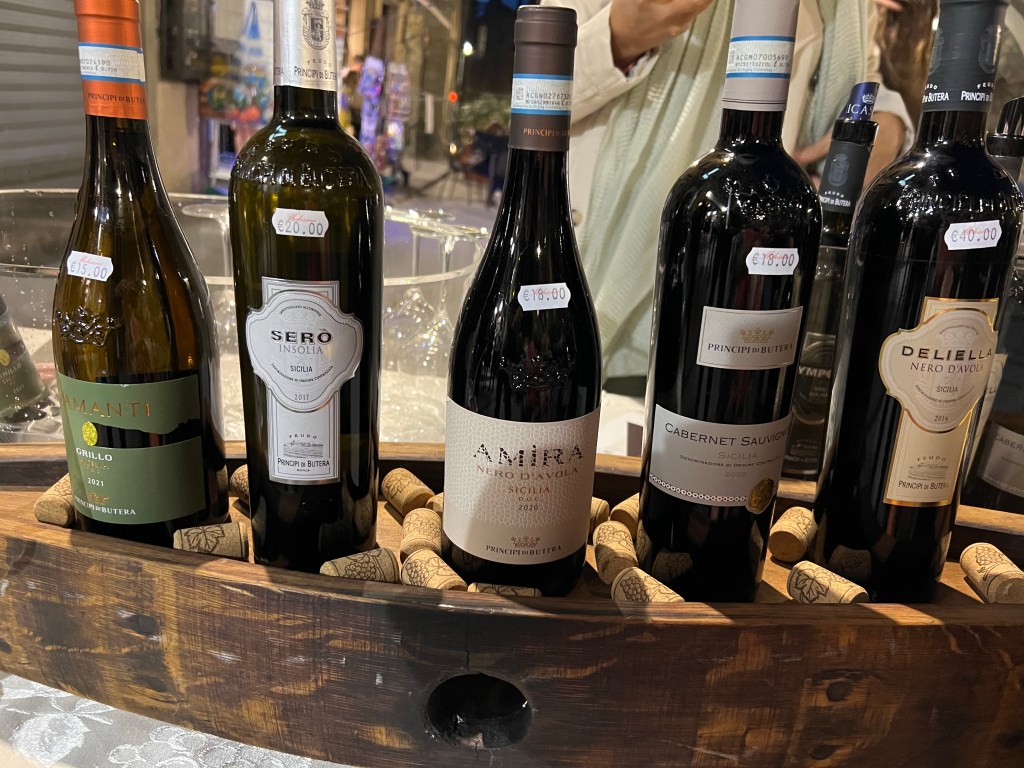
And while staying in Cortona, I attended one of the Molesini’s winemaker dinners, with a Sicilian winery Principi di Butera, participating. The food from La Loggetta was excellent, especially the simple pasta with minced lamb in natural juice and pomegranate seeds, paired with the best wine of the night, a Syrah, not a traditional Sicilian grape….amazing!
A Grillo, fresh crisp white from Principi di Butera
I can’t say that I’ve been a fan of sweet wines in the past. Oh sure, nice for a dessert or some thing to pair with foie gras, if you can get it. But it’s not the first thing I think of when having a meal or just as an aperitif or an afternoon after mowing the lawn.
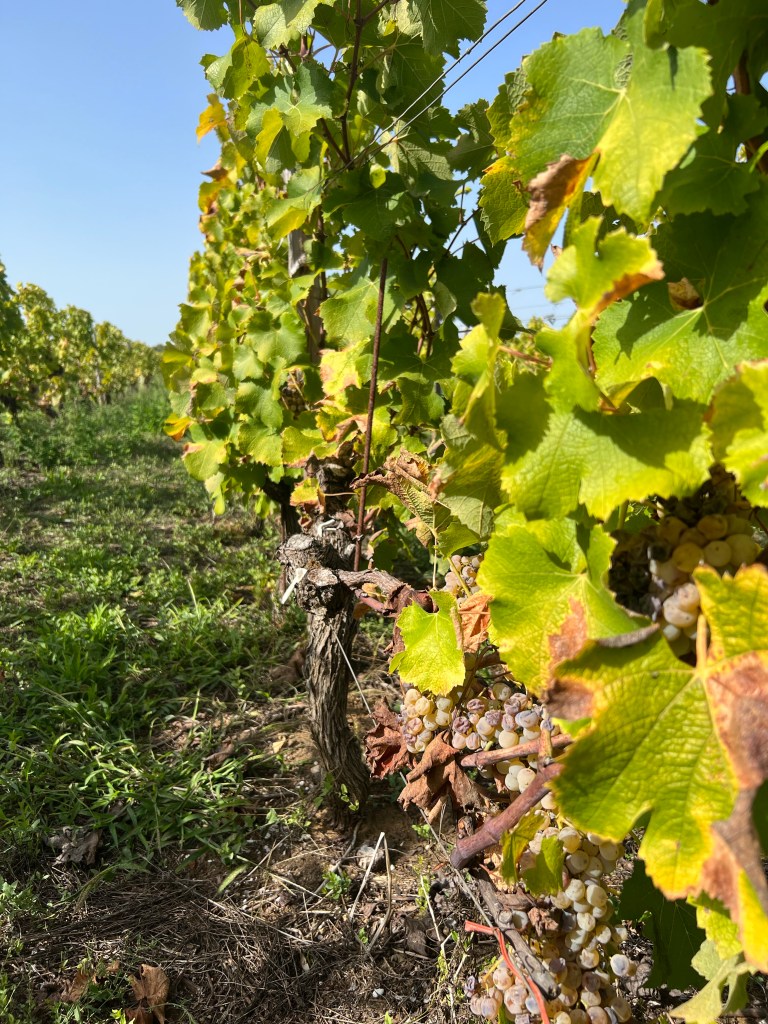
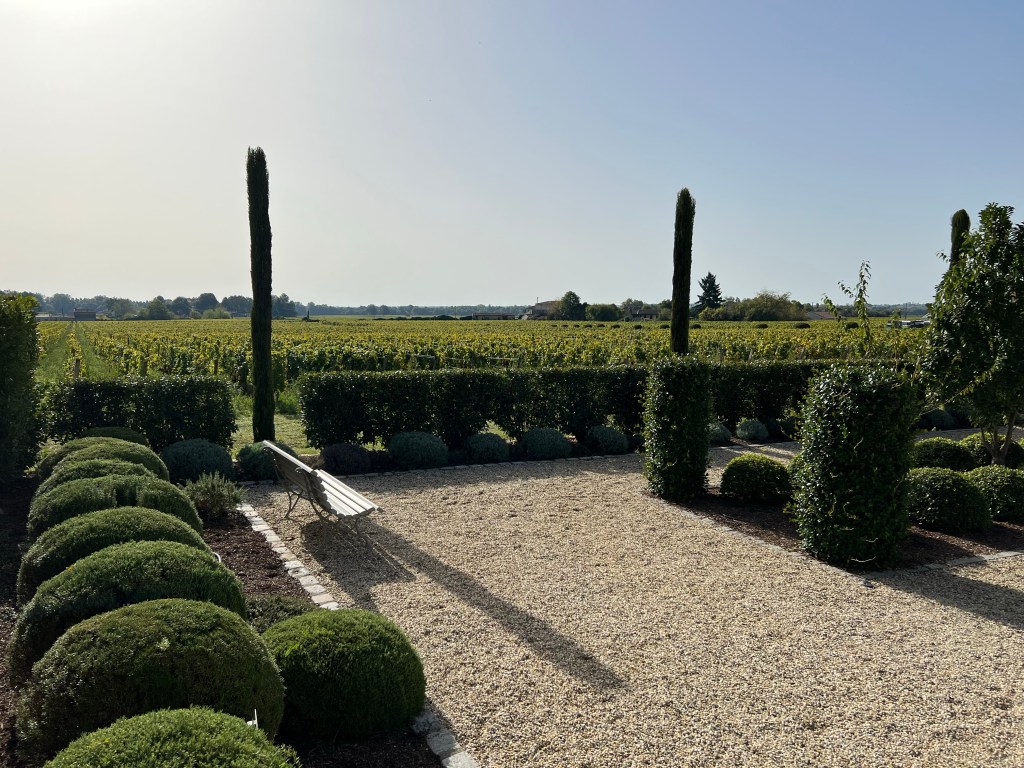
Vineyard in Barsac/Sauternes
However I can’t say that I’ve ever turn down a beautiful glass of port or Monbazillac (more on that later if I remember), given the right occasion.
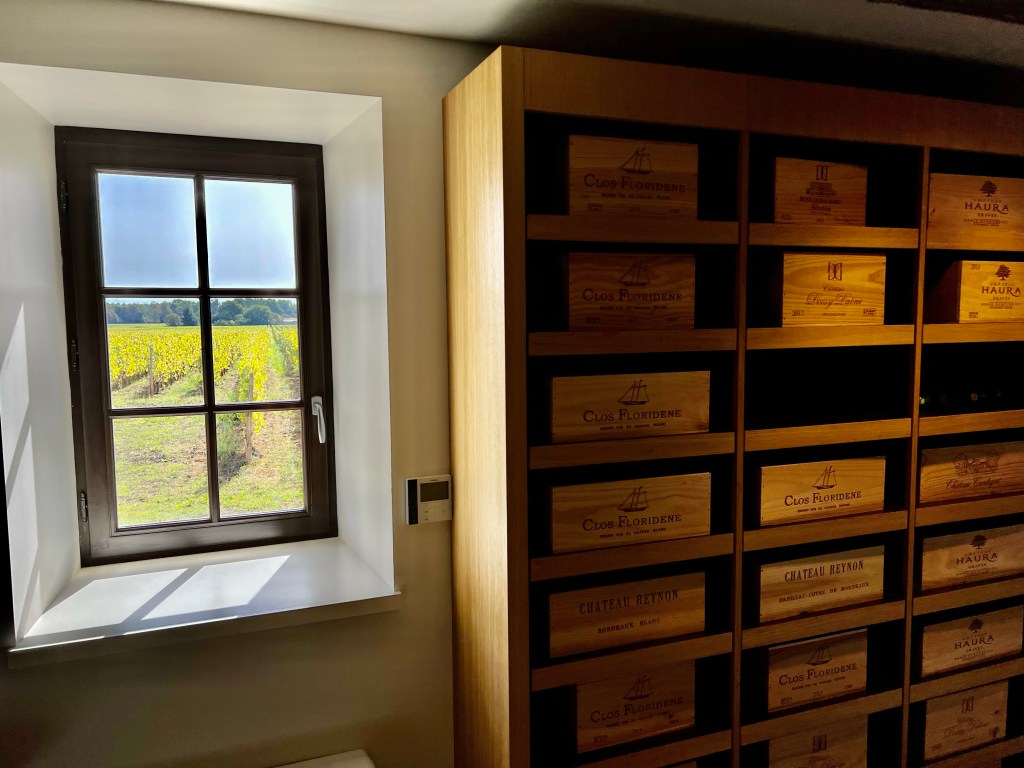
So, being in Bordeaux for two weeks, I really thought it was about time to visit the area south of the city of Bordeaux, specifically the Graves region, which includes Sauternes and another less famous appellation (geographic area for a specific type of wine, regulated by France, in this case, but also now by the EU), Barsac. Graves is also well known for dry white wine made from Sauvignon Blanc and Semillon grapes. I was hoping for a combination experience of a place that specializes in dry white wines, and another that specializes in sauterne and sweet wines. However the place that I picked initially for the dry whites was not available, so I chose Chateau Doisy Daëne (yeah two dots above the e), which it seems is the parent company of six shuttles or wineries, at least one of them that I recognized as a delicious white Bordeaux (Clos Floridene) that I drink regularly in the US (check klwines.com).
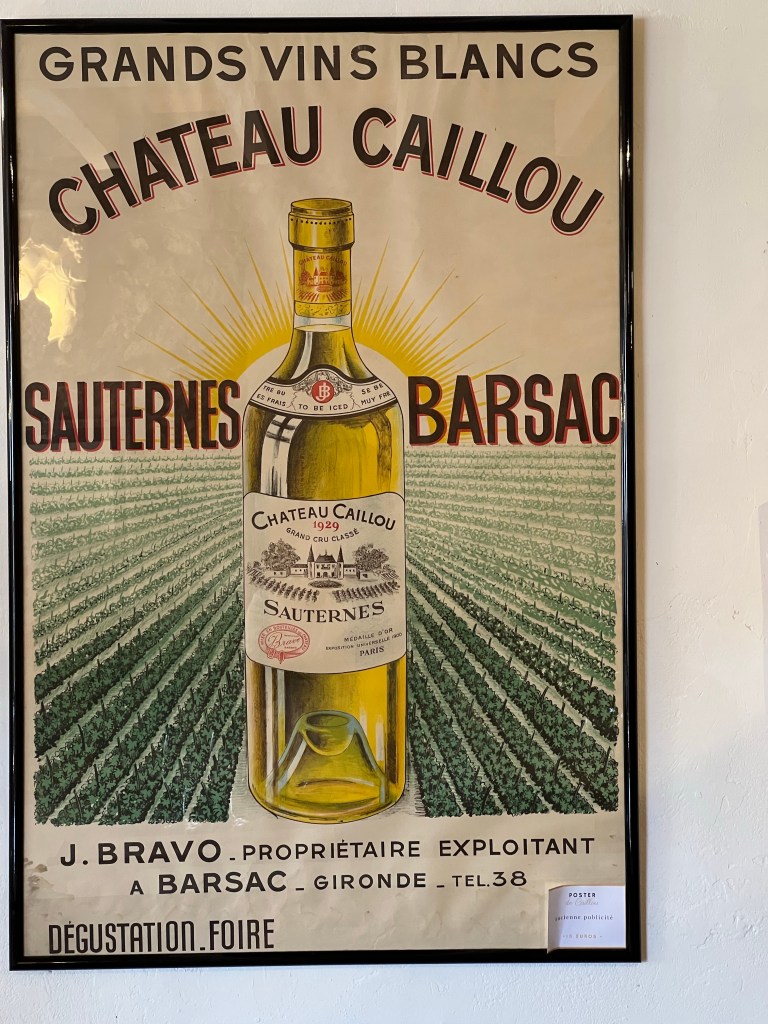
The second place I chose was Château Grand Caillou, not because I was familiar with it, but because it was in the town of Barsac, and they make both Sauternes and Barsac. Also, they had a nifty website which made it easy to book online.
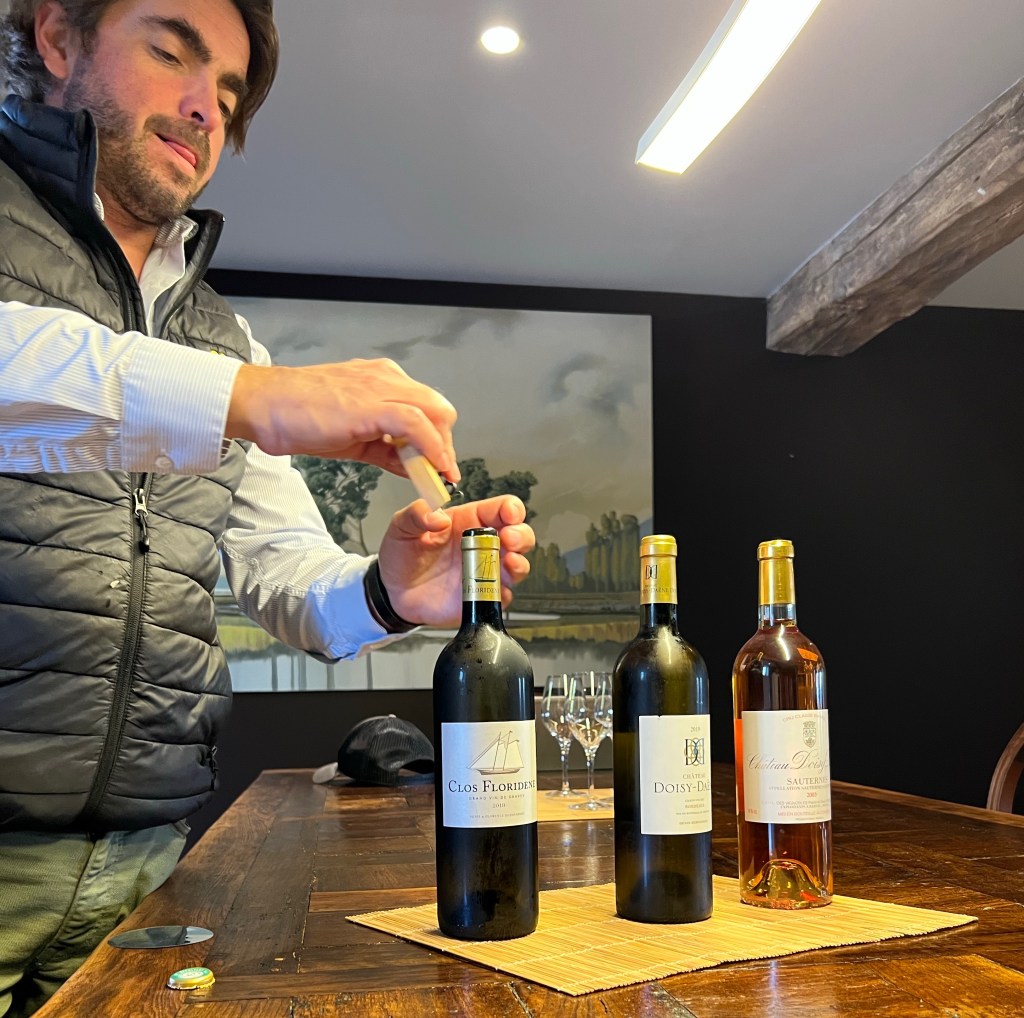
At Doisy Daëne we met with Jean-Jacques, the manager/owner. I had called the day before, and they weren’t sure that they could accommodate a visit in English, although I was willing to try my French. So when the staff called me back to confirm our appointment, she said there’d be an English speaking guide. I didn’t expect the owner(!). He walked us through the small winery, into the vineyards to show us the grapes, which were still on the vine. Without getting too technical, Sauternes and Barsac are late-harvest wines, and they benefit from a fungus which shrivels the grapes, removing liquid but still retains the sweetness. I say “late-harvest”, because all the dry white wines and even all the red wine grapes have already been picked; the only ones that remain are the Sauvignon Blanc and Semillon grapes that make the sweet wines.
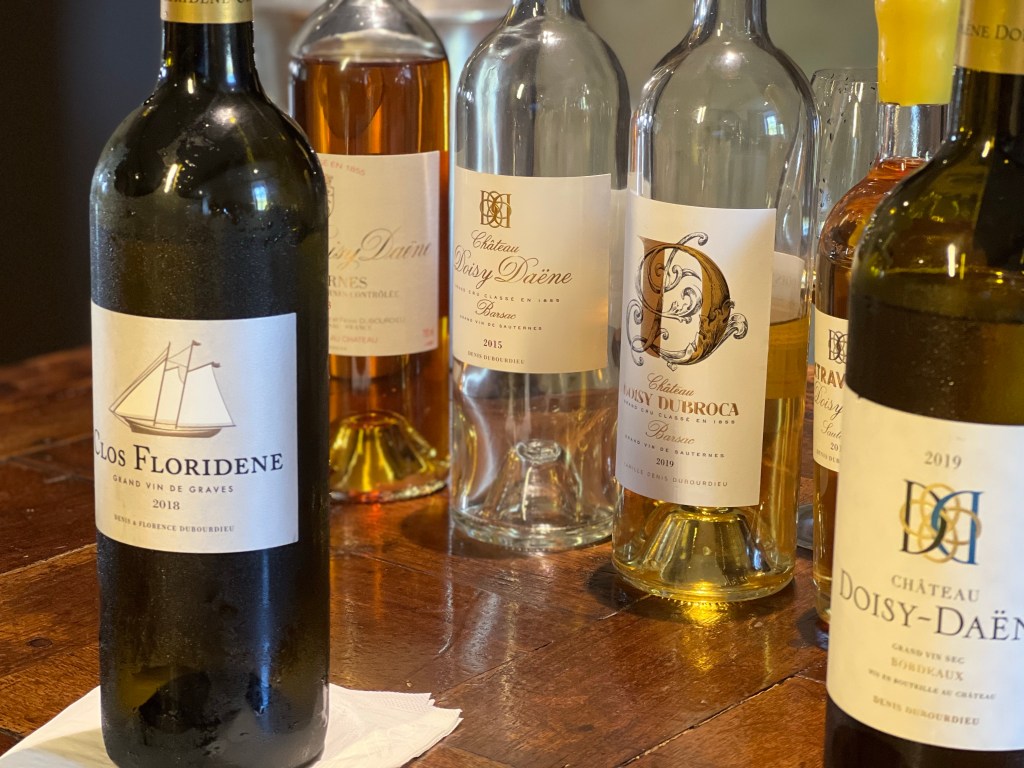
OK, on to the tasting. The first was a dry white from Clos Floridene which is a winery they operate just a few miles away. It was as good as I remember, crisp, citrusy and minerally. We moved onto a variety of sweet Sauternes and Barsac Wines, and altogether he spent well over an hour with us, which included a couple of short breaks for phone calls from his vineyard manager. Keep in mind, the harvest of the sweet grapes had just began that Monday, and was going on for another week or so. So this is an active period for them and it was extremely gracious for him to spend so much time with us.
Dry white Graves and Barsac sweet whites behindJean Jacques Dubourdieu, Doisy Daëne Wines
Jean Jacques acknowledged there have been too much emphasis on Sauternes and Barsac wines as being sweet wines, relegated to the sweet wines section of wine stores worldwide. Instead, he suggested that it be considered as an aperitif, welcoming wine, maybe something to pair with savory appetizers or just on its own. I agreed, and bought a handful of the small bottles to sample at home. The flavors and aromas range from tropical fruits, from apricot to candied mango, pineapple, honey, honeydew melon, cantaloupe and just clung to the tongue well after even the tiniest of sips.
Our second stop after lunch was at Château Grand Caillou. Our guide Elsa, walked us through the tiny winery. Where Doisy Daëne it was a small to medium sized winery, in comparison Grand Caillou was tiny. At both wineries I was surprised by the amount of personal attention that we received. Granted, we were the only visitors there at the time, but they spent just about as much time as we were willing to stay there,and didn’t rush us at all. The wineries in this region will have a open house November 11 12th 13th, so if you happen to be anywhere near there, I would definitely recommend a visit or two or three. I would add that all the wines I’ve tasted so far are incredible bargains, especially considering the exchange rate with a dollar. Of course it means I will have to carry these bottles around for the rest of the trip, but that seems like a small sacrifice.
I’ve always loved Spanish wines, from the satisfying garnacha-forward rosés, to the thirst-quenching, food friendly (and always affordable) cavas, to the more serious reds from Rioja, Jumilla, Priorat and Ribera del Duero.
Let’s start with a great meal at Moratin in Madrid (recommended by my exercise instructor).
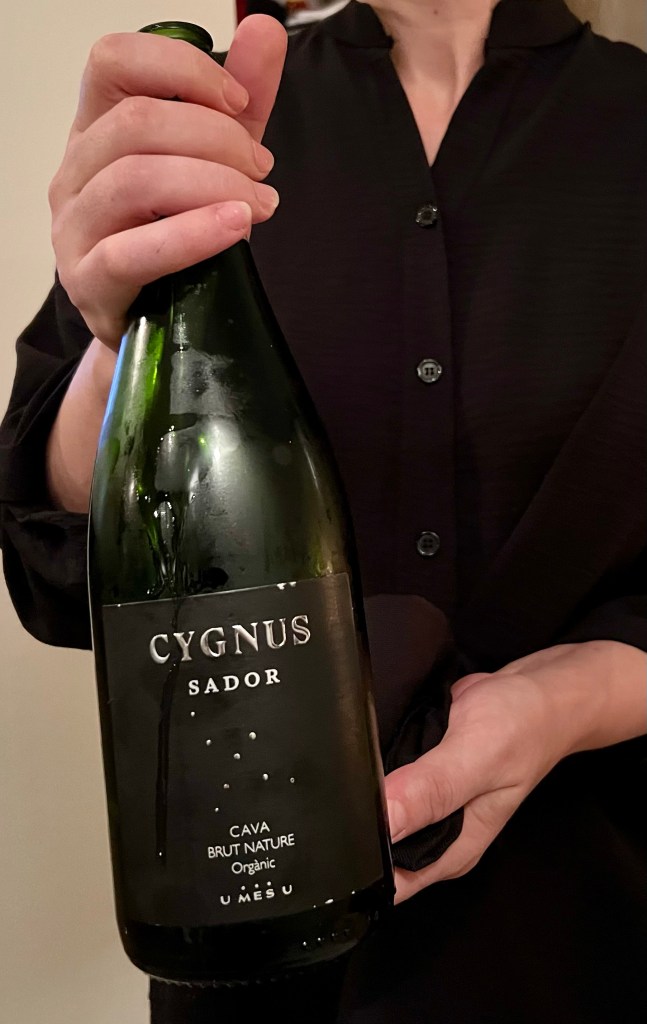
#CygnusSador cava
A crisp, refreshing glass of sparkling cava from an organic producer. A great way to open the appetite. Citrus peel, chalky nose, lingering finish. Yum.
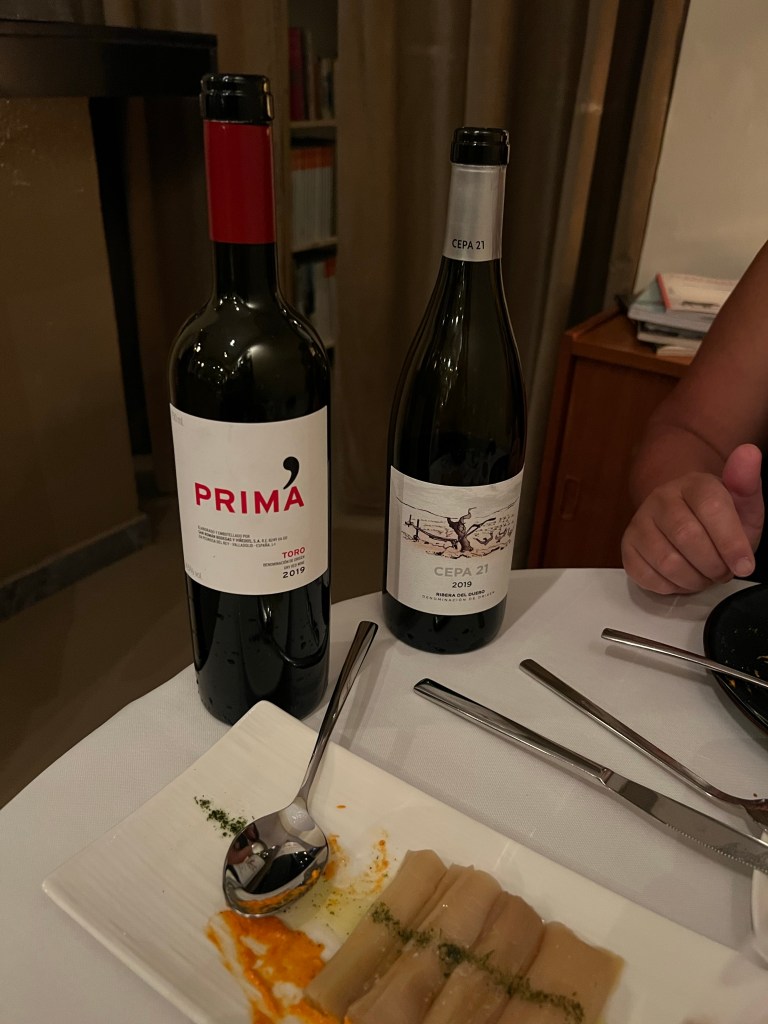
Our maitre-de/waiter/owner of this small (10-12 tables) wine bistro was the best guide for this short journey through Spanish wines. He sensed my enthusiasm and suggested that I try half-glasses so I could try a variety of wines. What a guy. Ok, so he brought two bottles to the table to sample from these two Tempranillo-based wines. (ok, to say “Tempranillo-based wines” in Spain really isn’t narrowing things down….Tempranillo is the grape for Spain’s most renowned red wines, e.g. Rioja, Ribera del Duero, Toro).
I chose the Cepa 21 for its freshness and intensity of flavor, to pair with my main dish of veal-stuffed cannelloni (not a very Spanish dish). The Prima, from the Toro region was funkier, earthier, and a wine I might’ve chosen to pair with wild game, lamb or something different. Or if I was just in the mood, which is often just as important.
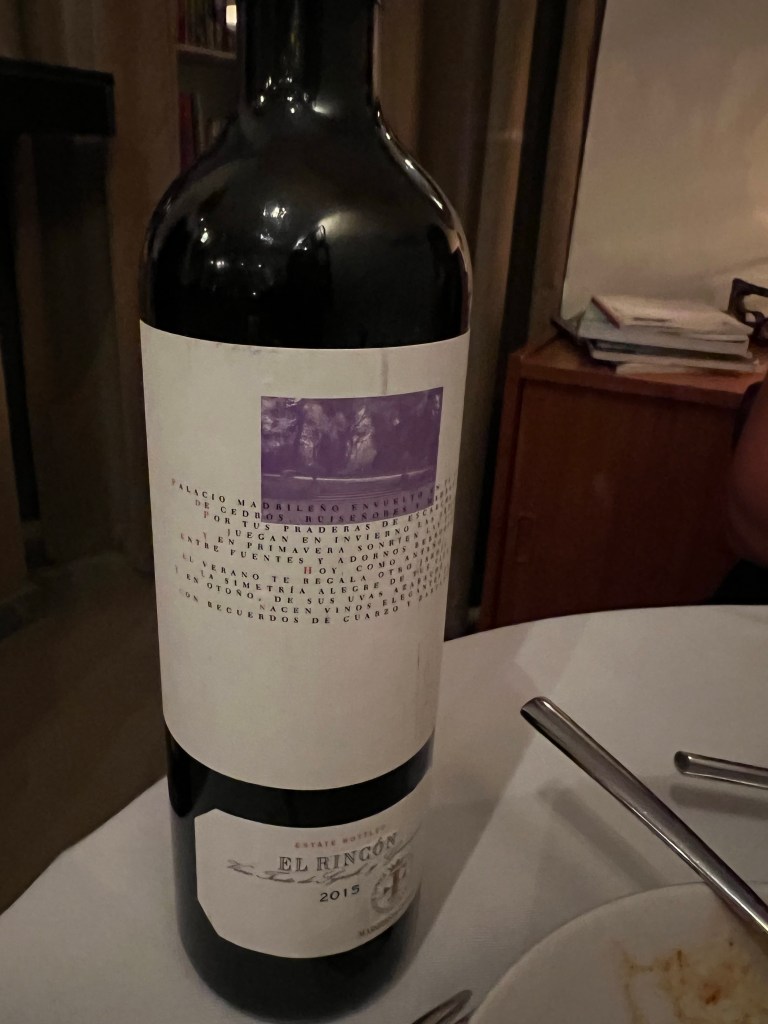
This left me some capacity to try another half-glass of another red, this time a Syrah-based wine from nearby vineyards in Mardrid, which are not really well known in the US. Damn, Spain makes sooooo many amazing wines, and are possibly the best bargains for high-quality wines in the world. Not hardly exaggerating! anyways, back to the “El Rincon”…Syrah grapes with a small percentage of Garnacha (aka Grenache). Delicious, well-balanced, rich deep raspberry/cherry on the nose and palate, silky finish, medium tannins and just plain delicious.
Ok so I’m lazy…I have established that…so tonight I’m posting two different dinners (and wines) that I’ve had over the past week. Fair enough (he said)…
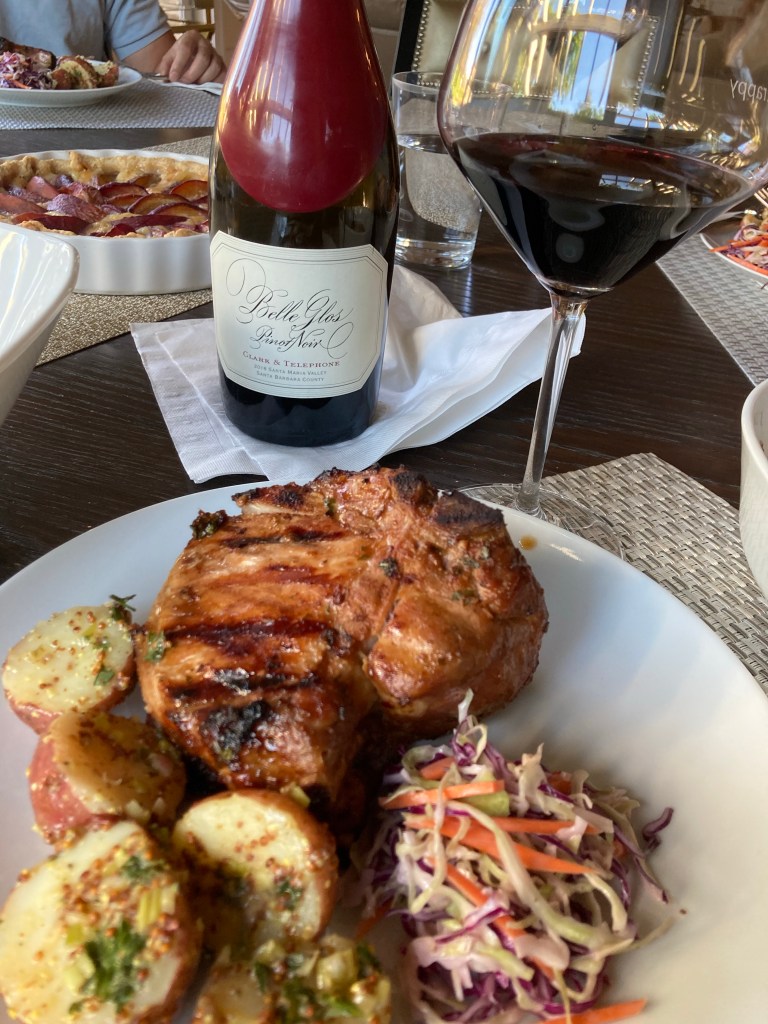
#1: Bel Glos 2018 Pinot Noir, Santa Maria Valley.
Omg. Voluptuous.
Silky minerally intense blue red fruit, incense spices, rich on the palate, long silky sweet finish, sweet oak balanced with acidity makes it a pleasure to go back for another another another sip. Luxurious.
Amazing match to the grilled Mongolian spiced pork chops. Damn.
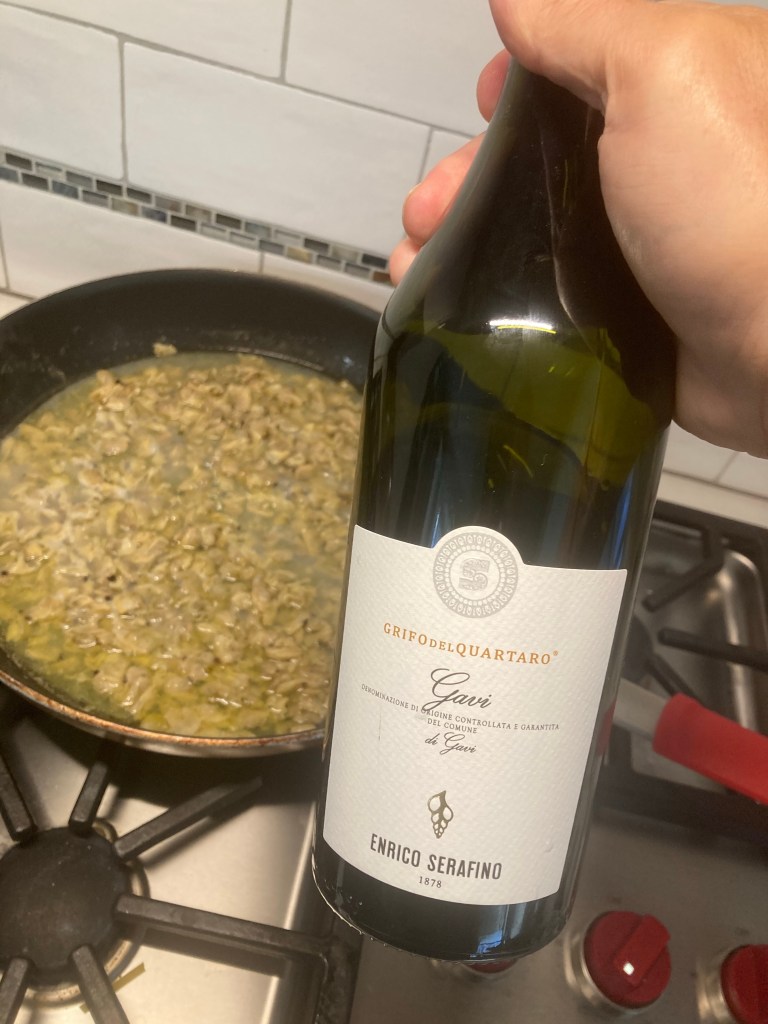
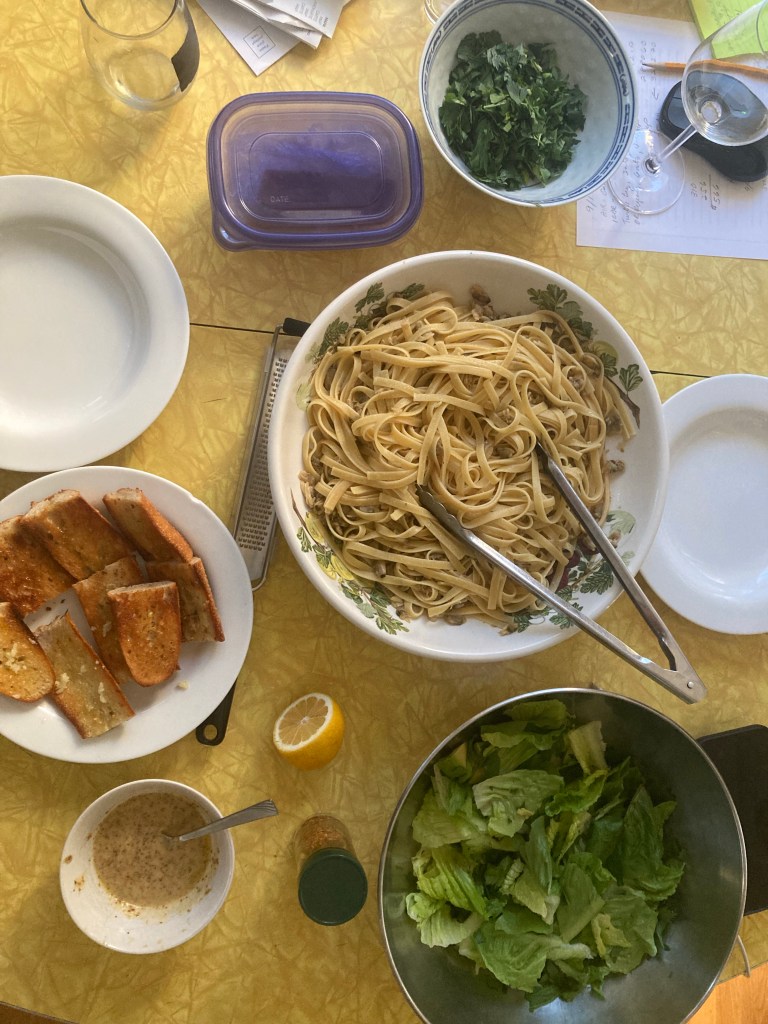
Next up, tonight’s dinner: pasta with clams, in this case, fettuccine (too fat; shoulda stopped at linguine or spaghetti, but wtf it’s a weekday).
GAVI!
#2: Grifo del Quartaro, 2020 GAVI. I LOVE Gavi! It’s a minerally, yet fruit friendly, very dry, medium-light white wine, but this one is of high quality, with a lingering finish. Light golden color with a bit of effervescence makes it super refreshing and pleasant! High acidity, perfect with seafood …I’m thinking pasta with clams (duh), but also raw fish, ceviche, other white fish. Or just by itself. With me, of course.
time to get off my ass and start writing about what I’m drinking. I don’t pretend to be a writer, but my instinct is to put the rumblings in my head into written form and make them more tangible in some way. Let’s see if we’re successful.
Writing (I’ve read) takes great discipline, which I claim not to have. When going to the gym I prefer to go to a class rather than do my own workout. I have a professional pushing and instructing me, making sure I don’t hurt myself, and an hour later, *voila*, I’m done with my workout.
I suppose there are writing ‘coaches’, but I doubt I would commit to that either. Ok, enough about my lack of commitment. On to writing more often! I’m looking at my upcoming (Late August to Late October) trip to Spain, Portugal and France as inspiration for the restart. I’m also using this as an excuse to upgrade to an iPhone 13 with its superior camera capabilities. Why not?
I’ll also use the time between now and the voyage to practice my WordPress “skills” and make the content easier to follow and maybe more aesthetically pleasing. And of course, the main point of this, to sharpen my descriptive skills as to whatarewedrinkingtonight.
A little of this a little of that… Going to try a mid-level, approachable and, according to my wine expert Ralph Sands from K&L (my all-time favorite wine temple), a beloved Bordeaux with locals in France. More hopefully soon with photos and thoughts on the wine
I REALLY hate winter. The short days, the fewer hours of sunlight, the feeling of hibernation, pounds being put on where they shouldn’t be put on; the gravitational pull on my body, mind and psyche. My most “optimistic” thought is that on the first day of winter, December 21, we’ve hit rock-bottom as far as few hours of daylight (or sunlight, if we’re lucky enough to have some), and that from that day forward, we will be getting little bits more of daylight each day. “summer is around the corner!”, I tell myself.
One December many years ago I decided to taunt the elements by hosting a mid-winter barbeque, and encouraged my guests to wear their finest aloha wear. I made festive cocktails and played music from warm, tropical places. It was fun, and I got to pretend that the short days didn’t bother me.
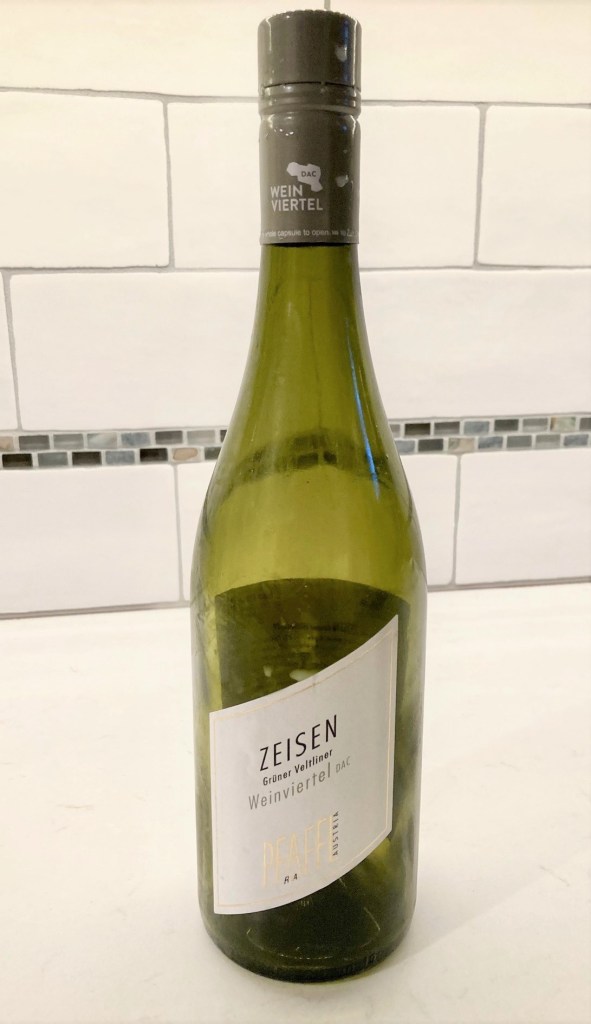
So what about tonight? Good takeout Chinese food (Flower Lounge, in Oakland’s Dimond District), along with the last glass-and-a quarter of Zeisen Gruner Veltliner. Rich, not racy, full bodied and viscous, with good (thought not “zippy”) acidity. A fine match, and much-more-than-good-enough for a Monday night in almost-December. A very addictive wine to drink on its own any 4:52pm of the week, by the way.
i had to fish the empty bottle out of the curbside recycling bin…and it’s cold outside
The bottle notes describe “spice, pepper and crisp refreshing fruit…” and the winery notes say “Incredibly crispy (sic) and fine-boned with plenty of pepper and a dash of extravagance. No wonder, because this wine grows on the largest fossil oyster reef in the world”. Keep an eye out for the 2019 vintage (mine was a 2018), which according to the website, won a ton of awards. Salud.





 What are we drinking tonight?